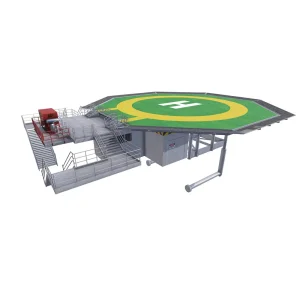
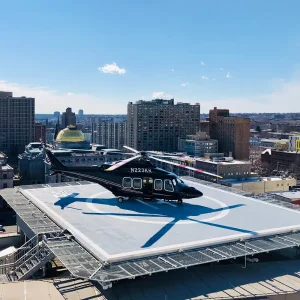
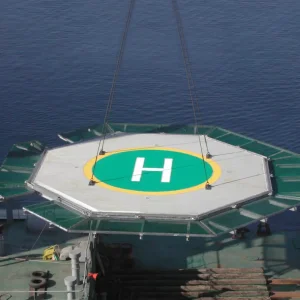
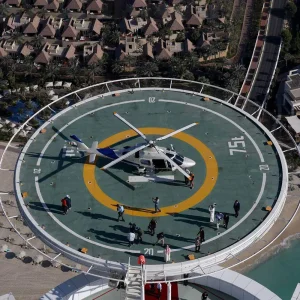
Browse our selection of CE-certified structural components designed for high-load architectural wall systems, heliports, and robust industrial framing interfaces. Select an item below to access product specifics, datasheets, and direct manufacturer pricing.
In modern commercial architecture and civil engineering, the demand for high-strength, lightweight material systems has shifted focus toward structural aluminum profiles. Under the scope of CE Certification (EN 1090-3 and EN 1999 Eurocode 9), structural aluminum assemblies utilized in building envelopes, external wall cladding, and load-bearing applications must meet rigorous standards for tensile strength, deflection limits, and fire classification.
Aluminum profiles manufactured for architectural walls function as more than simple exterior elements; they constitute the backbone of curtain walls, unitized panel supports, thermal barriers, and specialized aerodynamic systems such as helicopter landing deck substructures. By utilizing advanced temper treatments—predominantly 6000-series magnesium-silicon alloys (e.g., 6061-T6, 6063-T6, 6082-T6)—engineers achieve optimal wind-load performance, seismic resistance, and corrosion stability in harsh environments.
Specializing in 1xxx, 2xxx, 3xxx, 5xxx, 6xxx, and 7xxx series alloy extrusions customized to project specifications.
Operating a fleet of advanced presses starting at 800T up to a maximum force of 20,000T for ultra-wide profiles.
Capable of producing continuous unified sections up to 1.2 meters in width and 28 meters in overall length.
Established in 2015 and strategically situated in Foshan City, Guangdong Province—the global hub of premium aluminum extrusion technologies—LVXING Intelligent Equipment Co., Ltd. has grown into a leading developer of high-tolerance aluminum components. Backed by a highly specialized R&D team, we transition complex engineering blueprints into precise reality, ensuring that all physical outputs align exactly with design calculations.
To guarantee superior structural integrity, we partner with premier raw material providers, utilizing high-grade Fenglu aluminum billets. Our extrusion lines range from 800T to a massive 20,000T press capacity. This allows us to work comfortably with complex alloy chemistries (1xxx, 2xxx, 3xxx, 5xxx, 6xxx, and 7xxx series), creating structural wall profiles with sectional widths up to 1.2 meters and continuous lengths up to 28 meters.
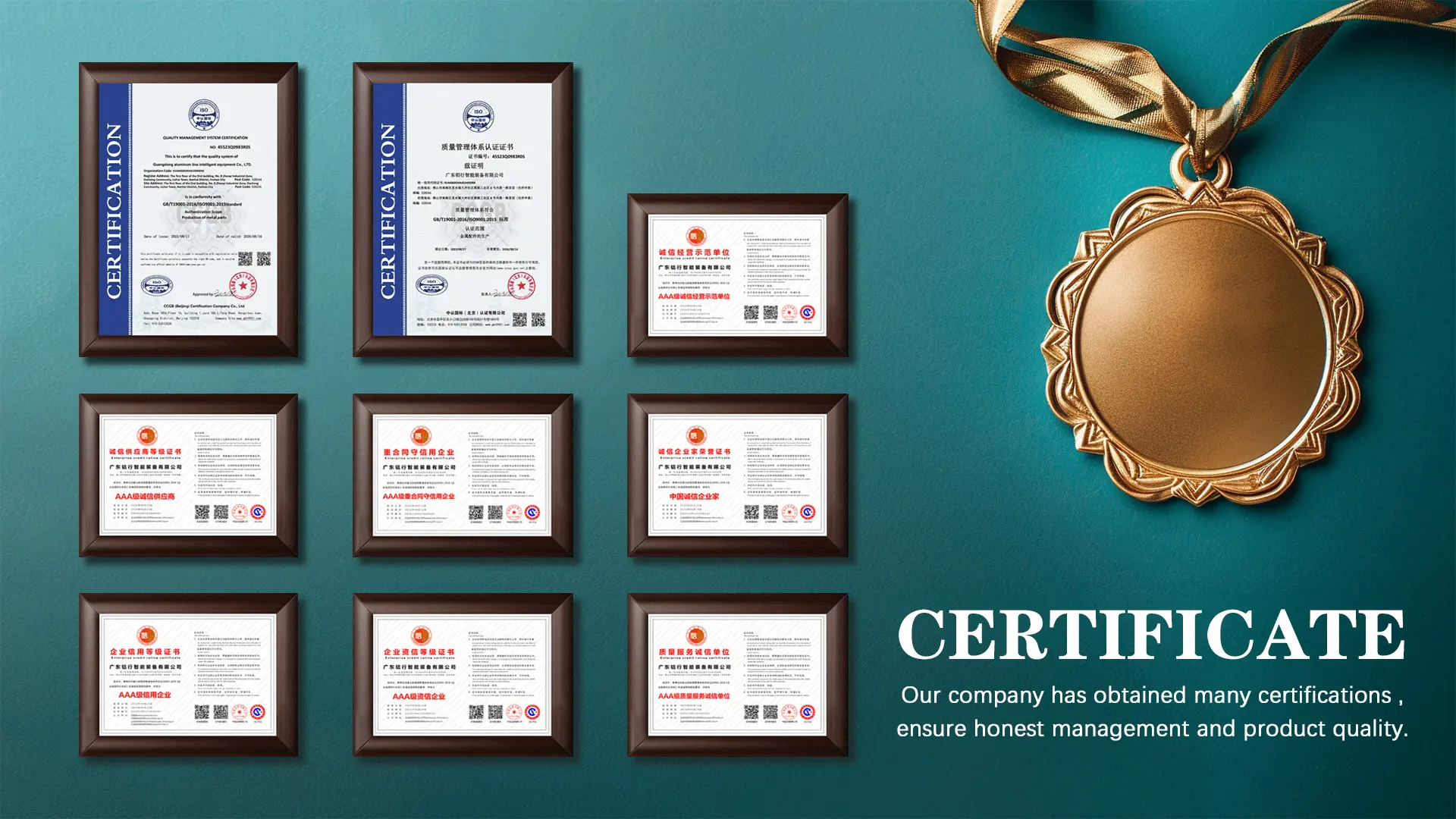
Because of their dimensional stability and tight mechanical tolerances, our profiles are widely utilized in heavy industries, marine architectural environments, medical centers, military installations, and aerospace engineering. Our manufacturing procedures adhere to global quality protocols, earning certifications under the GB/T19001-2016 / ISO9001:2015 standard, which guarantees traceability from billet chemistry to finished components.
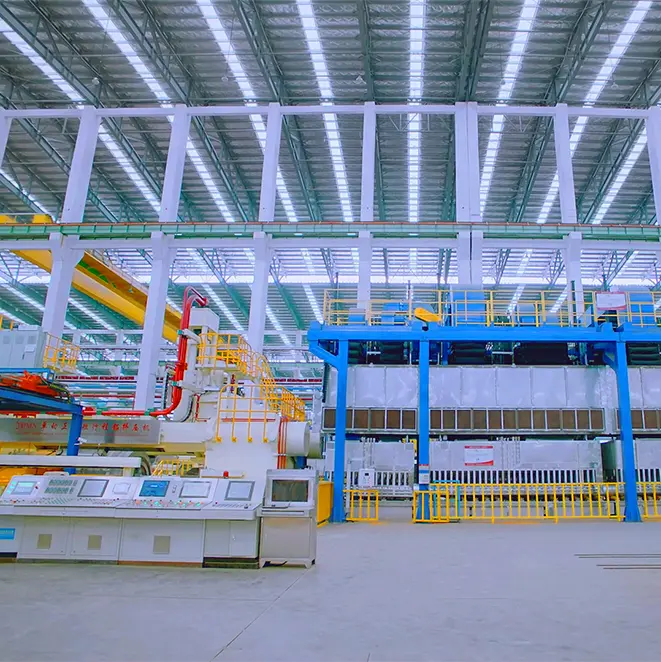

We have obtained the "Special Aluminium Materials for Aerospace" Certificate, confirming our ability to process high-strength structural profiles under zero-tolerance conditions.
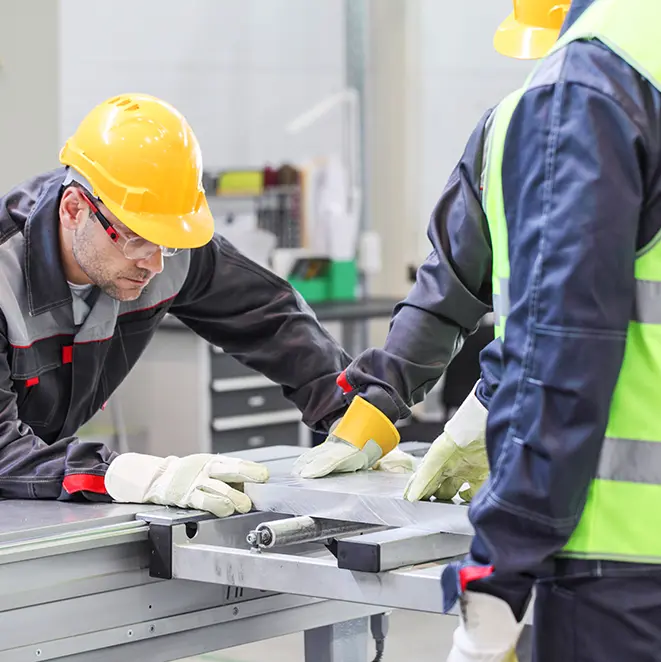

We provide and utilize premium Fenglu aluminum profiles. With extrusion lines ranging from 800T to 20,000T, we manufacture alloys in 1xxx to 7xxx series with widths up to 1.2m and lengths up to 28m.
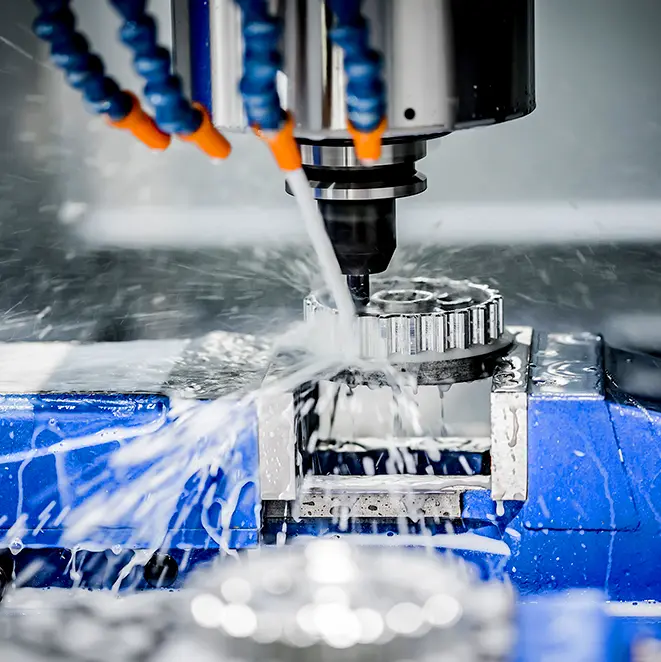

Our team of technicians brings over 15 years of practical experience. Our deep understanding of client requirements allows us to identify potential issues and offer insights, turning concepts into optimized products.
Procuring structural wall profiles from a Chinese manufacturer, particularly one located in the industrial cluster of Foshan, offers distinct cost and process efficiencies. The primary advantage stems from a highly integrated local supply chain. In Foshan, aluminum ingot sourcing, die creation, billet heating, extrusion, surface treatments (anodizing, powder coating, PVDF), and deep CNC processing occur within a close geographical radius.
This proximity lowers material handling costs and reduces overall production lead times. By using large-scale extrusion machinery (up to 20,000T), we run long-format profiles with minimal weld lines and high section modulus. For international buyers, this equates to structural panels that need fewer connection splices, lowering on-site assembly costs and reducing risk points on external walls.
Additionally, China's shipping and logistics networks facilitate direct ocean transport from Shenzhen or Guangzhou ports to major international terminals. LVXING manages these logistical phases, applying sea-worthy packaging (wooden crates, interleaved protective paper, shrink wrapping) to ensure components arrive without surface blemishes or distortion.
For architectural wall profiles used in the European Union and other regions aligned with EN standards, CE marking is a mandatory requirement under the Construction Products Regulation (CPR). LVXING aluminum profiles conform to EN 1090-1 (Requirements for conformity assessment of structural components) and EN 1090-3 (Technical requirements for aluminum structures).
These standards define the execution class (EXC1 through EXC3), outlining strict parameters for material traceability, weldability, design calculations, and dimensional tolerances. When sourcing profiles for curtain walls or rooftop helipads, verifying the manufacturer's Factory Production Control (FPC) is critical.
Our profiles are accompanied by Declarations of Performance (DoP), specifying alloy composition, tensile strength ($R_m$), yield strength ($R_{p0.2}$), elongation capacity ($A$), and coating thickness for anodized or powder-coated finishes. This level of technical documentation simplifies local engineering approvals, ensuring structures meet local wind load, thermal movement, and structural safety requirements.
Architectural and industrial profiles must perform reliably under complex, multi-directional stress loads. While standard vertical profiles mainly manage static wind forces and thermal expansion, specialized wall installations, such as rooftop helipads or safety mesh framing, face dynamic load impacts.
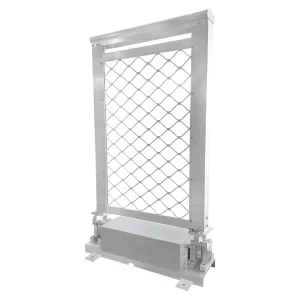
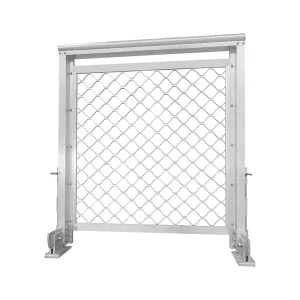
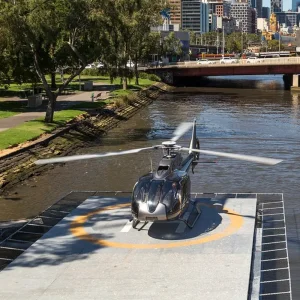
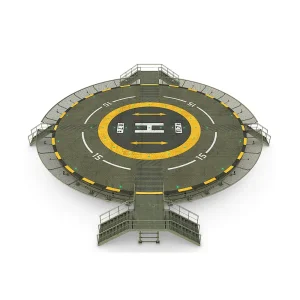
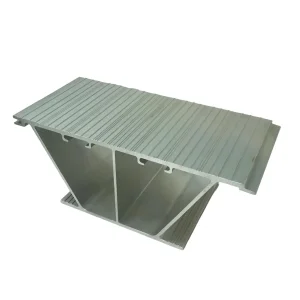
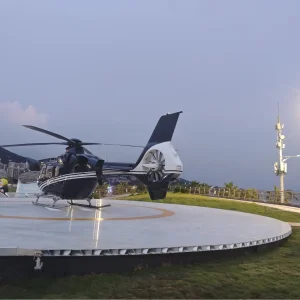
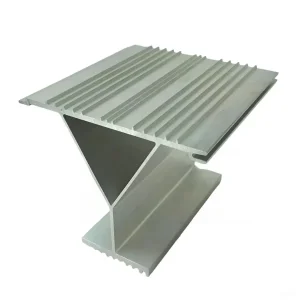
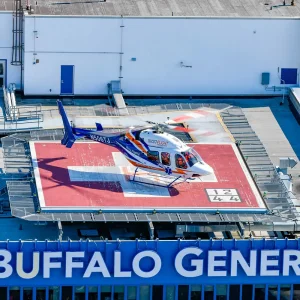
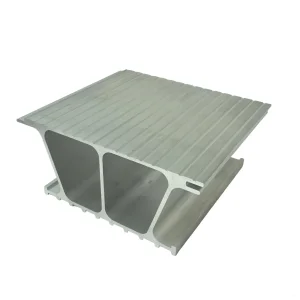
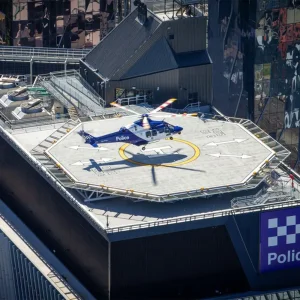
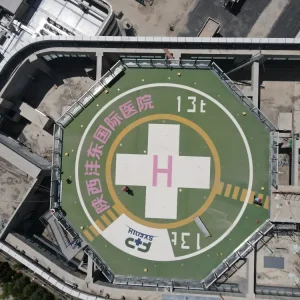
Our customized extrusion profiles, including the LX-HP01, LX-HP02, and LX-HP03 Helipad Aluminum Profiles, are engineered to handle the concentrated weight of helicopters while offering integrated channels for safety mesh installation.
In coastal or offshore environments, salt spray and high humidity accelerate corrosion. In these settings, we specify 5xxx (e.g., 5083) or 6xxx (e.g., 6082) alloys treated with anodized layer thicknesses exceeding 20 microns. This ensures structural longevity for ship decks, offshore platforms, and coastal hospital helipads.
Aluminum profile pricing is based on a combination of base material costs, manufacturing processing, and custom finishing details:
To request a precise quote, please provide your CAD drawings (.dwg/.dxf/.step formats), alloy and temper requirements, surface treatment specifications, and target volume. Our engineering team will deliver a comprehensive quote, including profile weight estimates, packaging details, and freight options.
Explore our full line of specialized profiles, ranging from hospital emergency landing structures to heavy-duty ship deck profile configurations. All products support custom extrusion, specific surface finishing, and CE-marked compliance.
 LvXing